
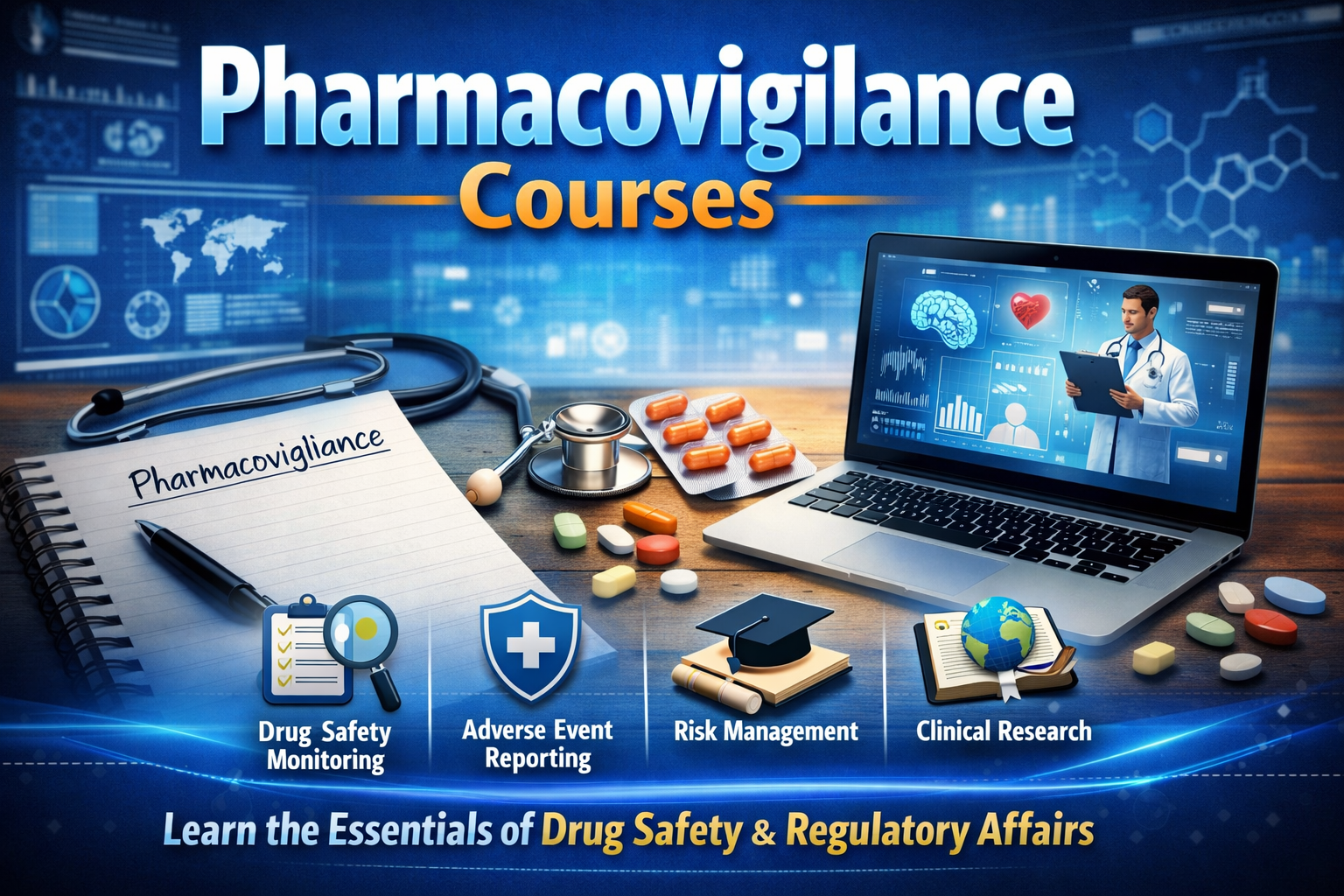
In today’s rapidly growing pharmaceutical and healthcare industry, patient safety has become a top priority. One of the most critical functions ensuring drug safety is pharmacovigilance. With increasing regulatory requirements and global clinical trials, the demand for trained professionals has increased significantly. Enrolling in a pharmacovigilance course is one of the best career decisions for pharmacy, life science, and medical graduates who wish to enter the drug safety domain.
What is Pharmacovigilance?
Pharmacovigilance is the science and practice of detecting, assessing, understanding, and preventing adverse effects or any other drug-related problems. It plays a crucial role in ensuring that medicines available in the market are safe and effective for patients. Pharmaceutical companies, CROs, hospitals, and regulatory authorities rely heavily on pharmacovigilance professionals to monitor drug safety throughout the product lifecycle.
Why Choose a Pharmacovigilance Course?
A professional pharmacovigilance course provides structured training on global drug safety regulations, case processing, signal detection, and risk management. These programs are designed to bridge the gap between academic knowledge and industry requirements.
Here are key reasons to choose pharmacovigilance as a career:
Growing demand for drug safety professionals worldwide
Excellent career opportunities in India and abroad
Suitable for pharmacy, life sciences, and medical graduates
High job stability with competitive salary packages
Opportunity to work with multinational pharmaceutical companies
What You Will Learn in Pharmacovigilance Courses
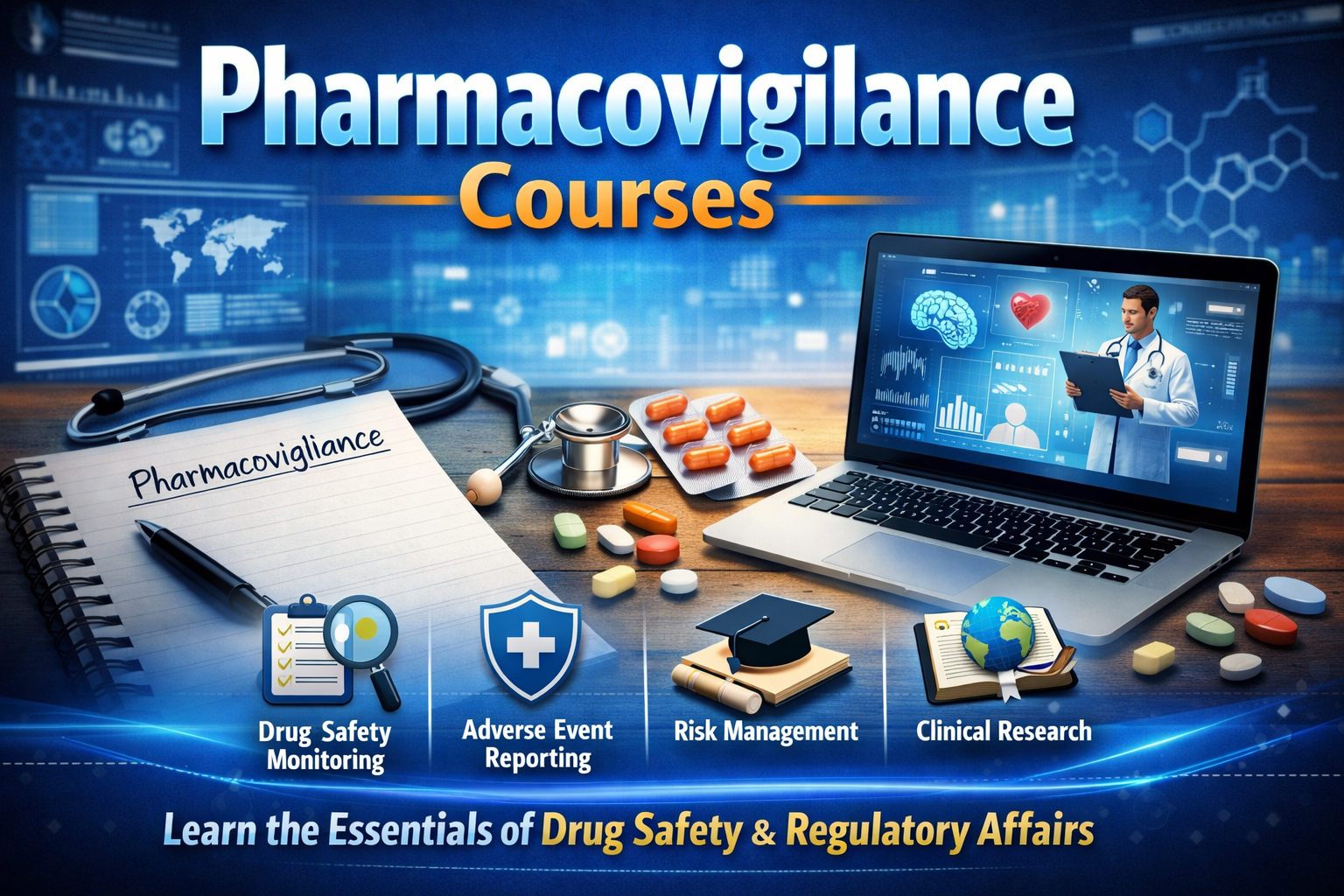
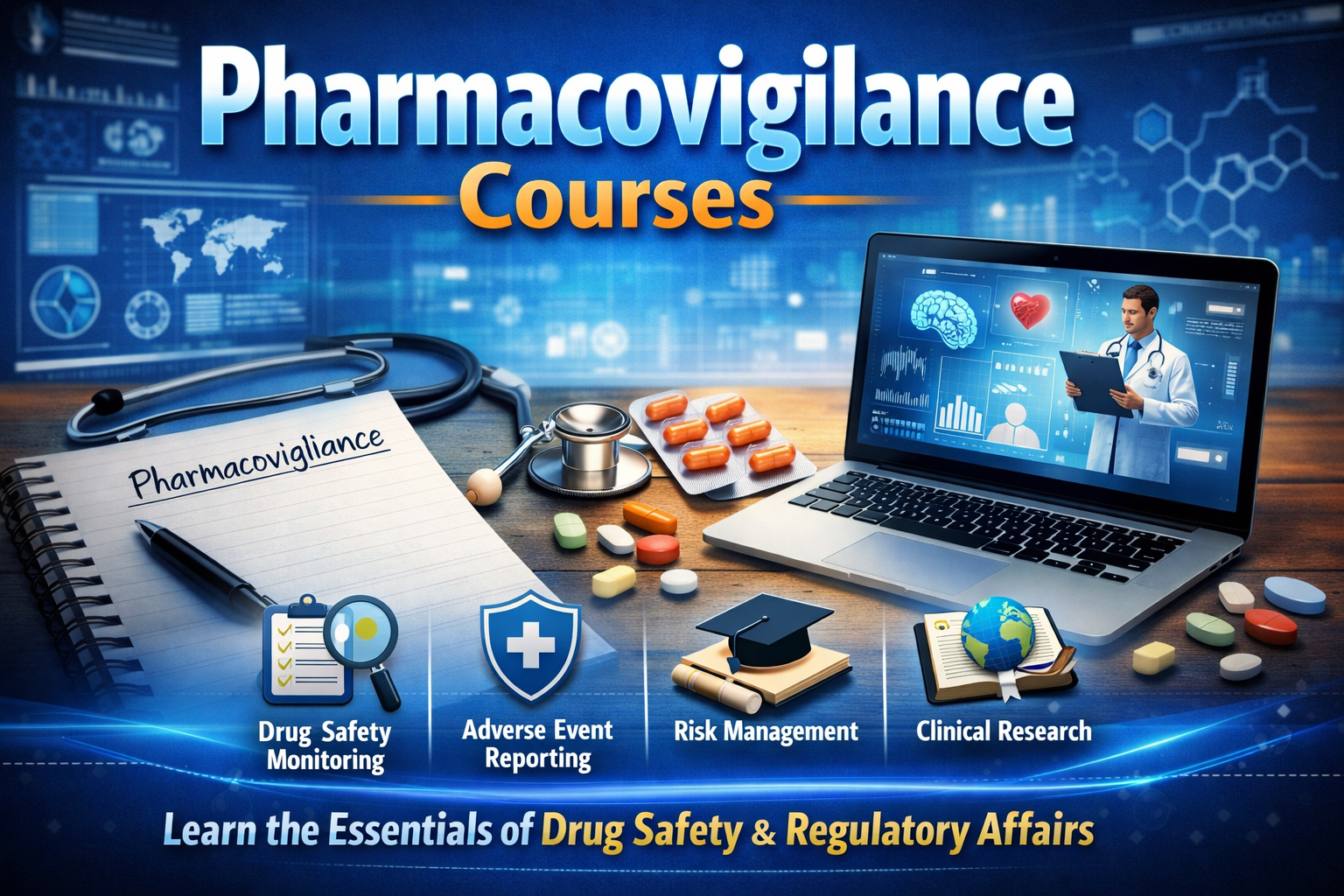
Well-structured pharmacovigilance courses cover both theoretical concepts and practical exposure. A standard curriculum includes:
Introduction to Pharmacovigilance and Drug Safety
Adverse Event (AE) and Serious Adverse Event (SAE) reporting
Individual Case Safety Report (ICSR) processing
Global regulatory guidelines (ICH, FDA, EMA, CDSCO)
MedDRA coding and medical review
Signal detection and risk management plans
Periodic Safety Update Reports (PSUR)
Pharmacovigilance audits and inspections
Practical training using real-time case studies and safety databases enhances employability and job readiness.
Importance of Pharmacovigilance Certification
A recognized pharmacovigilance certification validates your expertise and improves your credibility in the job market. Certification programs demonstrate that you possess industry-relevant knowledge and hands-on skills required by employers.
Benefits of pharmacovigilance certification include:
Better job prospects and faster placement
Increased confidence during interviews
Recognition by pharmaceutical and CRO companies
Career advancement and salary growth
Many employers prefer certified candidates for entry-level and mid-level pharmacovigilance roles.
Who Can Enroll in a Pharmacovigilance Course?
Pharmacovigilance is an ideal career option for:
B.Pharm, M.Pharm graduates
PharmD students
BSc / MSc Life Sciences graduates
MBBS, BDS, BHMS, BAMS professionals
Clinical research professionals seeking specialization
No prior industry experience is required, making it suitable for freshers as well as working professionals.
Career Opportunities After Pharmacovigilance Courses
After completing a pharmacovigilance course, candidates can explore various job roles such as:
Drug Safety Associate
Pharmacovigilance Executive
Case Processing Officer
Signal Detection Analyst
Risk Management Specialist
Medical Reviewer
Top recruiters include pharmaceutical companies, CROs, biotech firms, and regulatory organizations. With experience, professionals can advance to managerial and global safety roles.
Why Pharmacovigilance is a Future-Proof Career
With increasing drug approvals, post-marketing surveillance, and patient safety regulations, pharmacovigilance continues to evolve as a critical domain. Technological advancements like AI-based signal detection and real-world evidence further enhance the scope of this field. Investing in quality pharmacovigilance courses ensures long-term career growth and global opportunities.
Conclusion
A pharmacovigilance course is a gateway to a rewarding and stable career in the pharmaceutical industry. With structured training, practical exposure, and a recognized pharmacovigilance certification, candidates can successfully enter the drug safety domain and contribute to improving patient health outcomes. Whether you are a fresher or an experienced professional, pharmacovigilance offers immense growth potential in India and internationally.


Write a comment ...